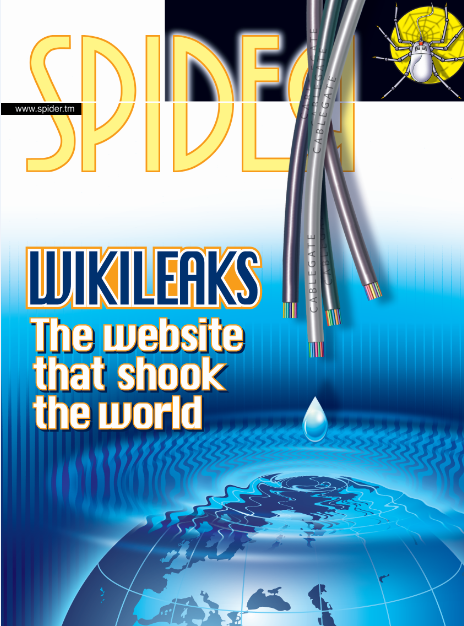
 Last month, the world witnessed a unique conflict in cyberspace – a tug-of-war of sorts to resist censorship and preserve freedom of expression on the internet, while sacrificing the privacy and secrecy surrounding diplomatic dealings and state affairs. Though the conflict started online, it threatened to engulf both cyberspace and the real world. The actors in this war of information and control were none other than the controversial whistleblowing website WikiLeaks and hacktivists – endeavoring to initiate some kind of idealistic global reform by exposing the geo-political secrets of the world – and the authorities fighting to hide their secrets.
Irrespective of the debate whether WikiLeaks is right in exercising its freedom of expression, or if it is just an anarchist, aiming to alter the diplomatic relations between governments, one can’t dismiss its impact on global politics and internet governance.
The US government’s effort to take down a single website has had a ripple effect, online as well as offline. More so considering how our online and offline lives have become increasingly intertwined. The latter has had profound consequences, not only for our social lives, but also in the way business is conducted, information collected, and how knowledge and culture are shared. As we continue to be drawn into the folds of a society, increasingly identified by technological artifacts – mobile phones, credit cards, portable computing devices and databases containing our personal information – we become more prone to becoming cyberwar casualties.
Nonetheless, these are indeed exciting and crazy times for the information technology society, just as it hovers on the brink of yet another information revolution. — R.S
Eds Note published in Spider Magazine, January 2011
 Reba Shahid