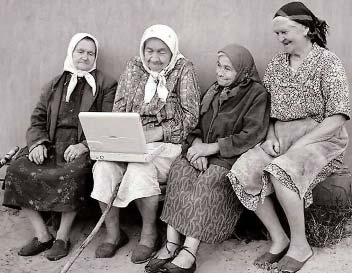
For many of us, it is all too easy to succumb or prescribe to predetermined notions of a person or group. In most cases, such perceptions are based on an oversimplification of some observed or imagined behavioural manifestation. The information and communications technology (ICT) sector too, is not devoid of such concepts or stereotypes – one of these being gender-based biases related to the consumption of IT products and resources.
It is all too easy to go on and on about the social impact of IT upon women in the context of their status in society – as in how IT empowers women, while simultaneously increasing their exposure to more modern forms of social ills and abuse. However, how often do we actually stop to ponder and ask what warrants the special treatment and attention when it comes to media coverage regarding women utilising the same ICT tools as their male counterparts? Is technology any different for women than for men? I don’t think so. ICT may be instrumental in altering and shaping our day-to-day communications, relationships, work, play and life in general, but being merely a tool, it does not discriminate nor distinguish among its users or abusers, or those in perpetual denial of its existence. That role or responsibility rests largely upon the opinion makers of the “new information age”.
Throughout history, mainstream media and journalists have played an extensive role in altering and shaping a society’s opinions and values. However, this responsibility is now shared by the New Media channels and its contributors. As media continues to push the boundaries of technology to bring news from parts of the world that simply couldn’t be reached before, the World Wide Web and social media platforms have emerged as ideal platforms for information dissemination and debate. However, given our devolving attention spans and increasing time constraints, sifting through the mound of information online can be quite tedious. Sticking to online resources which cater to one’s outlook and conform to his/her biases seems to be a simpler and convenient choice.
Stereotypes pertaining to gender-bias and IT usage need to be taken within a cultural context. The extent to which ICT tools can be truly instrumental in altering the status of women is linked with the restrictions or freedoms dictated by social norms and society. Back in 2008, I remember being amused to see middle-aged Nepali housewives step into a quaint little cyber-cafe in the old city of Patan in Nepal, where I sat deflating my brimming inbox. It was quite charming to see the women park their shopping bags overflowing with groceries, beside a vacant workstation, before donning a pair of headphones and settling down to video-chat with a loved on working abroad. Back then, the mere mention of my 2MB broadband home connection (from the now defunct Maxcom) elicited envious sighs from my Nepali friends, but in reality, it was I who was impressed at how these supposedly non-techie women were able to access and use the internet. Broadband connections may have been a novelty for the average Nepali, and only a few houses in that neighbourhood could boast having a personal computer, but that did not hinder anyone from benefiting from ICT tools.
My natural reaction was, of course, to compare this situation with what we have back home. How many women in Pakistan would be able/willing to use a computer in a similar setup in Karachi? More importantly, would they feel comfortable going alone or unchaperoned to what passes as a cyber café in a middle-class Karachi neighbourhood? (Think dimly-lit cubicles with ancient PCs, and browser history and bookmarks indicating all kinds of pornographic sites). Sure, one can always come up with the argument that given the proliferation of desi cable and broadband connections in Karachi, why would any self-respecting person want to access the Web in a cyber café in the first place? A friend’s PC or even a computer at work/school or hijacking the neighbour’s Wi-Fi would surely be more honourable, right?
Pakistani women may be vocal and visible on Twitter, Facebook, blogs and other social media platforms, but the ground realities are vastly different from those enjoyed by this small educated and connected group. Many homes in urban Pakistan (rural areas remain an untapped source of revenue by local ISP’s) may have internet connections, but the disparity of access among the various household members is all to visible. The younger members of the clan being more adept at adopting new technology usually rule the family computer and other devices use to access the internet. The patriarch and the so are supposed to be the bread earners in the middle- and lower-middle class family setup, where the women are relegated to the role of housewives or family caregivers, with their priorities revolving around various domestic chores. In this social setup, men have more opportunities and avenues for internet access a compared to women. The women, if computer literate, may be allowed computer access only when it is not required by any other family member. However, most are dependent on other family members to help them access e-mail and engage in “video chat with family members residing abroad”.
Amidst limitations on internet accessibility and mobility (enacted by the prevailing conservative and patriarchal social outlook) for the vast majority of Pakistani women, stories of home-based women entrepreneurs utilising ICT to promote and manage their businesses, who breach barriers to attain academic and personal goals, are worth highlighting. As the media goes about highlighting the success stories of these determined and enterprising women, it has an equally important role and responsibility towards creating awareness of the perils and scams that lurk online – targeting all types of users.
This article was first published in the Digital Life section of the January 2012 issue of Spider magazine, published by the Dawn Media Group
 Reba Shahid